Posts

Two professionals shaking hands during a meeting

Mapping Change

We begin each year with the purpose of implementing changes in our lives, but in most cases, for lack of a true plan, our intentions fade during the first weeks of the beginning of the year.

Establishing a change map, with its objectives and action plan, implementing the action plan, monitoring progress, evaluating progress, introducing modifications if necessary and celebrating the successes achieved is, in general, difficult to implement individually and autonomously.

The support of a professional Coach, properly trained and certified, whose objective is to facilitate the change intended by the Coachee, significantly supports the change process.

To define the objectives of the coaching process, it is important to identify the level of well-being and performance at which the Coachee is, the performance and well-being matrix developed by Anthony M. Grant being a very good tool.

Different combinations of well-being and performance levels require different coaching strategies and styles. A client with a low level of well-being and high performance requires different strategies compared for example to a client with a high level of well-being and high performance.

The solution-focused coaching process, with how questions, is more effective than the problem-focused one, with why questions.

A solution-focused mindset has a positive correlation with levels of well-being, self-regulation, and resilience.

A solution-focused process, in alliance with a positive and trust-based coaching relationship between Coach and Coachee, has a multiplying effect on the results of the coaching process.

The process is much more effective depending on the level of self-knowledge and self-awareness developed by the Coachee.

The most effective self-reflection process is one focused on the future, on finding solutions. Reflection focused on the past is reflection focused on problems not solutions.

Solution-focused self-reflection supports monitoring of the action plan and self-awareness supports the evaluation of performance and well-being and the recognition of achievements. If necessary, and for greater alignment at each moment between actions and objectives, the Coachee can implement changes in their action plan.

The objectives established in the coaching process are not limited to objectives defined in a SMART way (specific, measurable, achievable, realistic and defined in time), they can also be learning and development objectives, maintaining a positive approach, in solutions that translate into actions.

In my coaching processes we end each session with the recognition and celebration of the learning from the session. The learning is integrated into an action plan, whose actions are consistent with the solutions identified in the session and with the objectives defined by the Coachee.

A coaching process focused on solutions and aligned with well-being translates into greater effectiveness.

Fátima Ribeiro, Associate Certified Coach (ACC) by ICF


The article was written based on my interpretation of the presentation in ICF Advance, “Success factors in the coach-coachee relationship and the role of self-reflection and self-insight in Coaching” de Anthony M. Grant, Ph.D., reconocido investigador y autor en Psicología del Coaching.

Two professionals talking in an office

Developing Your Leadership Potential as a Woman

female leadership

In my article “Female leadership in Panama” I briefly describe the conclusions of a study developed in Panama on “Women in business management: gaining momentum in Panama.”

Among the measures aimed at overcoming the dilemmas and internal contradictions that women face when reaching positions of responsibility, the study identifies mentoring programmes, coaching and career development plans.

Coaching helps identify beliefs that may limit a woman’s professional and leadership growth, and break habits that hold back progress in her professional career, such as a promotion, a successful salary negotiation, or a career change.

The 12 habits that stop you…

In my coaching processes I use, among other tools, the 12 habits identified in the book “How Women Rise” by Sally Helgensen and Marshall Goldsmith:

  1. Reluctance to claim achievements
  2. Expect others to spontaneously notice and reward your contributions
  3. Overvaluation of experience
  4. Just build instead of building and leveraging relationships
  5. Do not enlist allies from day one (allies, mentors and sponsors).
  6. Put your work before your career
  7. The perfection trap
  8. The desire to please
  9. Minimization
  10. Too much
  11. Rumiando
  12. Let your radar distract you

These habits often appear together. For example, the habit (1) Reluctance to claim achievements often appears accompanied by the habit (2) Expecting others to spontaneously notice or praise and reward your contributions.

Others that can be found together are the habits (3) Overvaluing experience and (6) Putting your work before your career and the habit (7) The perfection trap.

Plan of action

If you detect some of these behaviours or habits in yourself, the suggestion is that you establish a strategic plan to implement changes.

Align your objectives with your purpose, start with one, maximum two habits, which you fragment into small habits or routines, be specific and concise in your actions and define a time limit to implement them.

Recruit professional help such as a coach or someone committed to your development and who also wants to implement changes and establish “peer coaching”, promote your objectives, ask for feedback, listen, thank and implement changes during the course of your action plan.

In a coaching process, purpose, objectives, objective and subjective reality, visions and options are worked on in an integrated manner and an action plan is implemented.  The action plan encourages the implementation of actions, accompanied by the development of relationships and feedback, which allows the desired changes to be implemented by measuring their effectiveness.

Our beliefs shape our resistance to change, our responses help shape our circumstances, and our behaviours shape how others respond to us.

Organisations can implement coaching processes that support the development of female leadership, or professional women can choose to individually contract a process that contributes to their professional development.

References: Book “How Women Rise”, break the 12 habits holding you back from your next raise, promotion or job, Sally Helgesen y Marshall Goldsmith.


A professional leading a team meeting in a glass-walled room

Women’s Leadership in Panama

Reality

Panama occupies the position 43 in the world ranking in 144 countries of the World Economic Forum’s Gender Parity Index, but 71% of companies do not have women at the highest management level.

According to the study “Women in business management: gaining momentum in Panama”, the percentage of representation of women in management positions varies by level and becomes narrower as we rise in level.  In the supervisory ranks, we have a level of representation of women of almost 37%, at the mid-level 34%, at the senior level 22% and at the top executive level only 8%.

The difficulties for women to be in management positions (CEO or member of the Board of Directors) increase with the size of the company, reiterating that large companies have the lowest representation of women in senior management positions.

The lesser presence of women is felt in areas of operations and research and development, with women in Panama occupying more relevant positions in areas of marketing, sales and human resources.

90% of companies agree that women lead as effectively as men, but different barriers were identified in the study, the first related to a lack of general or line management experience and the second to stereotypes about the role and skills of women, which seem to reflect a contradictory view with the first statement.

Other important barriers identified in the study were women’s limited availability or time flexibility to travel, lack of support to combine work with relationships/family, and leaders’ lack of commitment to the advancement of women.

In the study’s focus group, women identified the main obstacles as: the dilemma between family/career balance, the organisation that is not very conciliatory, and spaces of power that are not very inclusive.

70% of the companies surveyed declare they have a balanced and inclusive culture, but only 30% of them recognise that, with the same skills and professional qualifications, women find it more difficult to reach senior management positions.

There are limitations such as social conditions and an exclusive corporate culture and there are limitations imposed by the women themselves due to personal beliefs or family conditions.

Important benefits obtained with the implementation of diversity and gender equality initiatives in companies are recognised in the surveys, the most relevant being: the increase in business results, including profitability and productivity, the increase in the ability to attract and retain talent and the improvement of the company’s reputation.

It is important to promote and disseminate these important benefits, promoting successful good practices and working with different actors jointly to reduce the identified barriers.

Among the measures aimed at overcoming the dilemmas and internal contradictions that women face when reaching positions of responsibility, the study identifies mentoring programmes, coaching and career development plans.


Coaching supports change

The coaching process is key to identifying beliefs that can limit a woman’s professional and leadership growth, and to breaking habits that hold back progress in her professional career, such as a promotion, a successful salary negotiation or a professional change.

In the coaching process, objectives are identified, objective and subjective reality is reflected on, options are generated and an action plan is implemented.

The action plan stimulates the implementation of actions, accompanied by the development of relationships and feedback, which allows the desired changes to be implemented by measuring their effectiveness.

The coach accompanies the professional in their executive and leadership development and the process can be implemented at the initiative of the company or directly with the professional who is committed and responsible and wants to enhance their professional career. The key indicators or KPI’s They are established case by case. In the case of processes contracted by an organisation, it includes evaluations of leadership growth by the stakeholders or interested parties selected as significant to the process, being a measurable and quantified process.

In my article “Are you a woman? Develop your leadership potential” You can find more information about female leadership development.


References: The study “Women in business management: gaining momentum in Panama”, promoted by CoNEP – National Council of Private Enterprise and ILO – International Labor Organisation, and prepared by Stratego and Enred Panamá.

Portrait of Fátima Ribeiro smiling

Life is generous!

Be part of my network of contacts and let me support you!

Life is generous if we are open to its possibilities, if we are resilient in pursuing our dreams, if we face challenges and overcome difficulties, if we are grateful for our achievements and generate a network of support along the way.

This support network is configured in various areas of life – personal, professional, community or social – and can have various functions, including consolation, clarification, confrontation and provision of energy.

It may include friends, close or distant family, co-workers, neighbors, hobby partners, professional advisors, people from the community, among others.

This network can provide us with people who listen to us, recognise us, console us, clarify us, provide us with energy, connect us with others, confront us to be a better person and a better professional, provide us with information and support us in solving difficulties or problems.

We are social beings, who grow and develop through interaction with other people. It is a give and a receive.

This giving and receiving gives us more and more when it is a generous and true process, focused on developing, empowering and realizing dreams.

My purpose as a Coach is to empower with purpose, contributing with enthusiasm and confidence, to develop the potential of each client through new strategies of thought, emotion and action that promote empowerment, forge strong relationships and overcome barriers.

Life, despite the difficulties and constant challenges, has been generous to me and I am grateful for everything it has given me.

I am happy when I share my knowledge and support the development of my professional clients and everyone around me, when I put my purpose into practice.

I also learn a lot from my clients, who inspire me every day to be a better professional, a better person.

“Openness” is a word that inspired me and marked me enormously during the previous year. Openness to new contacts, new interactions and new opportunities.

With these thoughts in mind, and as part of my social responsibility as a Coach, I offer an opportunity tailored to your circumstances, to those who are committed to their personal and professional development and feel that as a professional Coach I can contribute to achieving their dreams.

I invite you to write to me, tell me about your dreams and projects, and why you believe that a coaching process can contribute to your professional and personal development. If you are truly focused on your development and take responsibility for the process, I offer you the opportunity to support you. You define the price based on your objectives.

The International Coach Federation (ICF) defines Coaching as a process of alliance with the client to promote the stimulation of thinking and creativity in order to maximise their personal and professional potential. Coaching is a personalised and dynamic process where the client identifies and develops the tools to transform into the best version of themselves and map out the steps to achieve their own definition of success.

Write to my email fatima.ribeiro.coach@gmail.com and tell me why you think that a coaching process with me can provide you with support.

This programme will last one year, from June 1, 2018 to June 1, 2019 and, depending on the emails received, each quarter I will offer one person the opportunity to participate in a Coaching process, with conditions to be mutually agreed upon and in accordance with the defined objectives.

Success in your development, in creating a network of contacts, in giving and receiving, in being positive and true in your interactions, contributing to the development of everyone around you!

Fatima Ribeiro

Presentation of Success Unlimited Network, SUN

SUN – Success Unlimited Network®

SUN is a coaching programme accredited by the ICF – International Coaching Federation.

Originated in London in 1981 by the British company Results Unlimited, the SUN methodology came to the US in 1987 with Teri-E Belf.

The SUN programme is one of the top three professional coach training programmes in the world.

Its origins are inspired by Sports Psychology and Management Competencies, and can be applied to all areas of life, both personal and business.

SUN is a visible leader in the coaching profession and in the world, updating and evolving to improve effectiveness while enhancing well-being.

The director and founder of the SUN – Success Unlimited Network® coaching school Teri-E Belf was the first woman recognised worldwide as a Master Coach by the ICF – International Coaching Federation, and has actively participated in the Ethics, Credentials and Accreditations and Continuing Education committees.

In May 2018 he joined the Circle of Distinction of ICF – International Coach Federation for his great contribution to coaching.

Happy to belong to the SUN community!

You can discover more about SUN at http://successunlimitednet.com/

Fátima Ribeiro

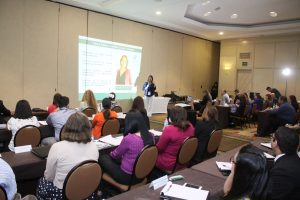
Fátima Ribeiro speaking at a conference on leadership development

Conference: Supporting Leadership Development

Conference: How to promote the development of leaders. Sponsored by IV COREGICAH – Regional Congress on Comprehensive Human Capital Management.

Date: May, 2018

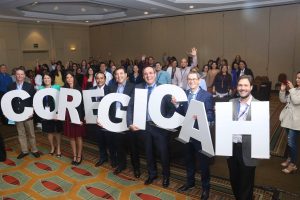
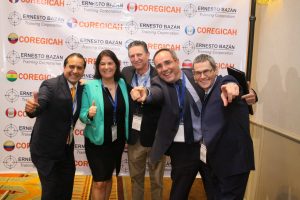
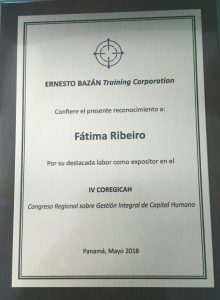
The audience follows a presentation by Fátima Ribeiro on leadershipGroup of COREGICAH participants poses with the name of the congressFátima Ribeiro with COREGICAH participantsFátima Ribeiro speaking into a microphone during COREGICAHCertificate of recognition awarded to Fátima Ribeiro at COREGICAH

A team gathered around a table to share ideas

The Future of Leadership

Recently attending a webinar by Dr. Marshall Goldsmith on the topic “leadership yesterday, today and tomorrow” and discussing leadership in educational media, motivated me to dedicate this article to the topic of leadership and its role in today’s society.
The current challenges of a global, complex, changing and diverse world demand different leadership.

The leader is no longer understood as a task-focused superior being who provides structure and direction but as a facilitator who is involved in dialogue and the participation of all.

“The leader of the past knew how to say, the leader of the future will know how to ask,” is a quote from Peter Drucker. For Paul Hersey “leadership is working with and through others to achieve objectives.”

Peter Hawkins tells us that the very concept of intelligence today is evolving. The concept of intelligence progressed from the intelligence quotient IQ to the emotional quotient EQ, and currently we are moving to the WeQ, that is, to the concept of collaborative intelligence.

The leader of the future demonstrates high interest, simultaneously in tasks or objectives and in people, and his behaviour changes according to what is required by the situation.

It is advisable to analyse the level of preparation of the teams, the autonomy in the decision and the level of power, prior to choosing the leadership style or the decision-making style.

Peter Hawkins believes that the people who will be most successful in the future will be those who have the greatest skills in establishing connections.

This reminds me of a quote from Jared Weiner at APEDE’s 2017 CADE Annual Executive Conference, “Soft skills like relationship building, collaboration, empathy, and cultural sensitivity will become the currency of the highest order. People with hybrid skills – high technological skill and deep social sensitivity – will win in the future.”

Global thinking, cultural and intercultural diversity, alliance building, intelligent technological knowledge and shared leadership (the leader as facilitator) are emerging dimensions of the global leader of the future, in the global leadership assessment model of MGSCC – Marshall Goldsmith Stakeholder Centered Coaching.

This MGSCC model is an interesting evaluation to serve as the basis for a coaching process for leadership development, in a structured, measurable and inclusive process of the stakeholders or people of interest around the leader, since leadership only truly exists when it is recognised. The model provides the structure and direction and the coach is a facilitator of learning.

Fatima Ribeiro