Posts

Feet balancing on a rope, representing uncertainty

Coaching in times of uncertainty

This article was originally published in the newspaper “La Estrella” and is part of a biweekly column from the ICF Panama Chapter to disseminate what Professional Coaching is. It seeks to inform, create more awareness and differentiate professional coaching, in which the Coach is governed by ethical principles and is continually improving his or her skills.

The International Coaching Federation (ICF), founded in 1995, is committed to advancing the coaching profession, which is why it has defined a model of key competencies with high ethical standards.

See the original article in this link.


Coaching in times of Uncertainty

To define the role and how Professional Coaching can support in times of uncertainty, instability and change, such as what COVID19 brings us, we need to keep in mind the definition of Coaching, according to the ICF – International Coaching Federation.

Coaching is a process of alliance with clients in which it is promoted through a reflective process. the stimulation of thought and creativity, seeking the maximization of personal and professional potential.

In the coaching process the focus is on the FUTURE, it is focused on developing SOLUTIONS for the future, with how questions. It supports the client in defining and focusing on their purpose, in building their vision, in evaluating current resources and those that need to be developed, in taking actions in accordance with their objectives.

We listen to what the Client is or is not saying, promoting support for the client’s self-expression; that evokes or awakens consciousness, facilitating the client’s understanding and learning through the use of tools and techniques such as powerful questions, silence, metaphor or analogy.

In the coaching process we recognise the emotions present at each moment without negative or positive connotations, we promote reflection on the areas or dimensions in which they are in the client’s control, jointly co-creating the state of mind that makes it possible to create solutions for the future.

Coaching is not Psychotherapy As mentioned in our article published in this column on March 1, 2020, in accordance with the ICF code of ethics, we refer clients to health professionals when we see warning indicators. We do not work in the space of panic, anxiety or depression, but we do work in the space of discomfort which is also a space of creativity and learning.

It is a process that can be carried out VIRTUALLY with effectiveness in results and well-being. Trust can be generated in the same way, and in some virtual processes the reflective process and communication can enhance the coachee’s learning.

Professional coaches work from SERVICE and CURIOSITY and are comfortable with Not KNOWING, which prepares them to support in situations of change and uncertainty. Discover more about the Coach Mentality in the article published in this column on March 15.

From the international and local ICF we work creating spaces for the development of the skills of our members, providing them with tools that allow them to be better Coaches in different contexts. We work locally with the support of an entire international structure to develop ourselves as professionals for the benefit of our clients.

The coaching process being a process of stimulating thought and creativity, from the vision of the desired future to the implementation of actions in the present that create solutions for that future, it can support, in this time of COVID19, among others:

  • People who need to develop new solutions for this changing, uncertain and ambiguous reality. We suggest reading in addition the article published in this column on February 20 “When to go to a certified personal coach?
  • Leaders who require support in dealing with ambiguity, making difficult decisions, communicating in this time of crisis, creating alliances with all stakeholders and cultivating a strategic leadership vision of today, tomorrow and the future.
  • Teams that require developing connections and relationships and evolving into high-performance teams.

The coaching process is not mentoring, it does not indicate what actions or decisions the client should take, it facilitates growth, to transform learning, knowledge and vision into action, promoting the client’s autonomy.


The author is ACC (ICF Associated Certified Coach), Coach in professional development, leadership and teams processes and member of the Board of Directors of ICF Panama.

Professionals sharing ideas during a work meeting

Key competencies in professional and ethical coaching

This article was originally published in the newspaper “La Estrella” and is part of a biweekly column from the ICF Panama Chapter to disseminate what Professional Coaching is. It seeks to inform, create more awareness and differentiate professional coaching, in which the Coach is governed by ethical principles and is continually improving his or her skills.

The International Coaching Federation (ICF), founded in 1995, is committed to advancing the coaching profession, which is why it has defined a model of key competencies with high ethical standards.

See the full article here link.

Poster for the Habits and Triggers workshop with Fátima Ribeiro

Habits and Triggers Workshop

Closing the year of 2019 and preparing for the year of 2020, we held a workshop at King’s Training Panama aimed at supporting you in identifying the habits, behaviours and triggers that influence the effectiveness of your leadership and becoming the person and professional you want to be.


  • Objective: Identify the habits, behaviours and triggers that influence the effectiveness of your leadership and support you in becoming the person and professional you want to be, using the tools defined by Marshall Goldsmith.
  • Agenda:
    • Habits that hold you back
    • Triggers (I am creating my world and at the same time the triggers are creating me), changing their impact
    • Six questions a day
  • Activities:
    • Feedforward
    • Individual reflections on triggers


“My name is …………………………….., I have really wanted to be better at ……………………………..

I have planned to do this for ……. years.

I have not been able to do this for myself in the last …….. year(s) and there is no chance that I will be able to do this for myself in the future.

I need help, and that’s okay!”


Fátima Ribeiro presents the topic Habits and Triggers in a training roomSlide on habits and triggers presented in a training session

A trainer talking with a group of professionals

What is Coaching?

This article was originally published in the newspaper “La Estrella” and is part of a biweekly column that we will have from the ICF Panama Chapter to spread what professional Coaching is. It seeks to inform, create more awareness and differentiate professional coaching, in which the Coach is governed by ethical principles and is continually improving his or her skills.

Coaching is defined by the ICF International Coach Federation as a process of alliance with clients in which the stimulation of thinking and creativity is promoted, seeking to maximise personal and professional potential, “professional coaching is based on an association with clients in a process of reflective and creative support that inspires them to maximise their personal and professional potential”…

See the full article here link


Fátima Ribeiro with another participant at ICF Panama's Coaching Fair

Coaching Fair – ICF Panama Chapter

On July 3, the Coaching Fair was held with the theme “Recognising and Practicing Professional and Ethical Coaching, an excellent event with the quality of ICF Chapter Panama, with international speakers such as Damian Goldvarg and Luchy Mejía and the participation of chapter members facilitating interactive workshops.

Some of the important messages:

  • “Of increasing importance in modern, complex and highly uncertain environments, coaching is defined by the International Coach Federation (ICF) as a process of alliance with clients in which the stimulation of thinking and creativity is promoted, seeking the maximization of personal and professional potential.
  • Practiced by qualified professionals, coaching is a continuous process of active communication in which the coach recognizes and respects the client’s autonomy in relation to their personal and work life.
  • The coach understands that each client is a holistic, creative and resourceful individual.
  • Coaching is a differentiated service from therapy, mentoring, consulting and training processes.
  • The ICF is dedicated to advancing the coaching profession by establishing high ethical standards (11 competencies and a code of ethics), providing independent certification, and building a global network of accredited coaches in a variety of coaching disciplines.”

Thanks to all the participants in the Fair, to all the ICF members who conceived, worked together for several months and made it possible to carry out this great event, thanks to the sponsors who participated, to the media that supported us in spreading the word about what Professional and Ethical Coaching is, and also to the participants who co-created with me and Erica Tamagusuku the workshop “And Now… How? Co-Creation for a Challenging World”!

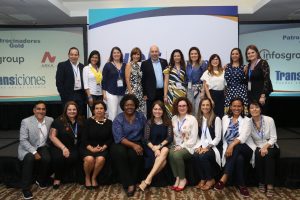
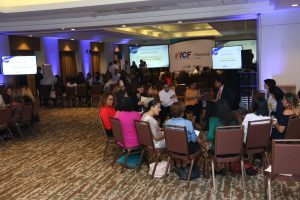
Group photograph of the participants of the ICF Panama Coaching FairParticipants gathered in the room of the ICF Panama Coaching Fair

Cover of Competitividad Ejecutiva magazine showing a group at an awards ceremony

Gender Equality in Competitividad Ejecutiva

Article: “Gender Parity in Panama

Originally published in Magazine Competitividad Ejecutiva – Page 7


Gender parity in Panama 

According to the report “Women matter: ten years of knowledge about gender diversity” by McKinsey & Company In 2017, the women they generate on average the 37% of world GDP Although they represent the 50% of the world population of working age. The report estimates that $12 trillion could be added to global GDP in 2025 by closing the gender gap.

Panama occupies the position 43 in the world ranking of the Gender Parity Index of the World Economic Forum (in 144 countries), with significant deviations in the economic participation and opportunity (with reference to labor force participation, equal pay for similar jobs, and estimated earnings earned)  and at the level of political empowerment.

At the conference “Women and Economic Development: Achievements and Potholes” – APEDE monthly lunch in March 2019, Leonor Calderón highlighted that they were detailed in Panama 12 economic-labor gender gaps, which are grouped into labor participation gaps, wage gap, promotion gap and transversal gaps, 12 measures and 63 lines of action were identified in the monitoring.

According to the study “Women in business management: gaining momentum in Panama”, promoted by CONEP and ILO, The percentage of representation of women in management positions varies by level and becomes narrower as we rise in the hierarchy. In the supervisory ranks we have a level of representation of 37%, at the middle level of 34%, at the senior level of 22% and at the highest executive level of only 8%.

From 2017 to date, progress has been made in Panama, among them:

– Law no. 56 of July 11, 2017

– Equality Seals Initiative in the company, with the participation of MITRADEL, MICI, INAMU and UNDP.

– National plan of the EPIC – International Coalition on Equal Remuneration, with support from the Vice Presidency, UN Women and ILO.

– Roadmap for Gender Equality, CONEP and ILO.

-WEP- Women’s Empowerment Principles, UN Women.

At the level of political empowerment, I highlight the awareness initiative “Invisible Barriers, Transparent Candidates”, with the support of the Foundation for the Development of Citizen Liberty, FONAMUPP and the Canadian Embassy.

I highlight the important work of the APEDE Executive Women’s Commission in the dissemination of such relevant initiatives.

It is important to follow the issue so that the implementation is successful, work with the different actors to reduce the identified barriers, integrate good practices such as mentoring programmes, coaching and career development plans, and that more organisations and companies join the different initiatives.

May each of us be an agent of change!

Fatima Ribeiro

Article by Fátima Ribeiro on gender parity in Panama


Other articles:


Fátima Ribeiro with Marshall Goldsmith

A day with Marshall Goldsmith

On Friday, May 10, I traveled to San Diego, California, for a learning-filled Saturday with Marshall Goldsmith, author of several best sellers worldwide, considered the #1 Executive Coach in the world and among the top ten Business Thinkers in the last eight years.

The invitation to participate from a group of 22 excellent professionals from various countries came to me a few days before and I was filled with enthusiasm to have the opportunity to work directly with a person whom I deeply admire.

The programme, which included a workshop, skills training, and a reception at Marshall Goldsmith’s home, exceeded my expectations.

A co-creation of learning about the leadership of the future; he feedforward as a fundamental tool to implement behavioural changes, recognised by the people around us; best executive coaching practices and a special space dedicated to female leadership.

The atmosphere and energy were extraordinary, in harmony with learning and sharing experiences. A great generosity from Marshall Goldsmith, his team, his wife and all the participants.

The workshop was filmed and will be integrated into the documentary that is being produced about the work and legacy of Marshall Goldsmith, which will be available later in 2020.

Being a better person and a better professional is a constant learning process. In this growth process we can ask ourselves, daily or weekly:

Did I do my best in?

  • Have clear objectives
  • Work to achieve my goals
  • be happy
  • Finding meaning
  • Build positive relationships
  • Be fully committed

“Life is Good.”

a hug,

Fatima Ribeiro


See also my article on Future Leadership

Books on leadership and professional development, including How Women Rise

Fátima Ribeiro presenting tools for personal and professional development

Tools for personal and professional development

On Friday, May 3, within the framework of the ICW – International Coaching Week ease one webinars free, in a joint organisation of ICF chapters in Latin America.

He coaching is defined by the International Coach Federation (ICF) as “a process of alliance with clients in which the stimulation of thinking and creativity are promoted, seeking the maximization of personal and professional potential.”

In the video you can find tools and valuable concepts such as values, skills, objectives and how to develop an action plan with results and well-being, the creation of a support network, feedback and feedforward.

Professional coaching that promotes the opening of new perspectives seeking to maximise personal and professional potential.

Watch the video here 


Poster for Fátima Ribeiro's webinar on tools for personal and professional development

Tools for personal and professional development

On Friday, May 3, from 3:00 to 4:30 pm (Panama time) within the framework of the ICW – International Coaching Week I will be providing a webinars free, in a joint organisation of ICF chapters in Latin America.

He webinar has the theme “Tools for personal and professional developmentl”. More information here.

He coaching is defined by the International Coach Federation (ICF) as “a process of alliance with clients in which the stimulation of thinking and creativity are promoted, seeking the maximization of personal and professional potential.”

From April 29 to May 5, different activities are promoted so that you can learn more about professional coaching and its benefits. On the Facebook page of ICF-IWC LATAM you can find all the information.

The ICF – Panama Chapter has existed since November 2015, promoting professional and ethical coaching and continuing education of its members.

Two professionals shaking hands during a meeting

Mapping Change

We begin each year with the purpose of implementing changes in our lives, but in most cases, for lack of a true plan, our intentions fade during the first weeks of the beginning of the year.

Establishing a change map, with its objectives and action plan, implementing the action plan, monitoring progress, evaluating progress, introducing modifications if necessary and celebrating the successes achieved is, in general, difficult to implement individually and autonomously.

The support of a professional Coach, properly trained and certified, whose objective is to facilitate the change intended by the Coachee, significantly supports the change process.

To define the objectives of the coaching process, it is important to identify the level of well-being and performance at which the Coachee is, the performance and well-being matrix developed by Anthony M. Grant being a very good tool.

Different combinations of well-being and performance levels require different coaching strategies and styles. A client with a low level of well-being and high performance requires different strategies compared for example to a client with a high level of well-being and high performance.

The solution-focused coaching process, with how questions, is more effective than the problem-focused one, with why questions.

A solution-focused mindset has a positive correlation with levels of well-being, self-regulation, and resilience.

A solution-focused process, in alliance with a positive and trust-based coaching relationship between Coach and Coachee, has a multiplying effect on the results of the coaching process.

The process is much more effective depending on the level of self-knowledge and self-awareness developed by the Coachee.

The most effective self-reflection process is one focused on the future, on finding solutions. Reflection focused on the past is reflection focused on problems not solutions.

Solution-focused self-reflection supports monitoring of the action plan and self-awareness supports the evaluation of performance and well-being and the recognition of achievements. If necessary, and for greater alignment at each moment between actions and objectives, the Coachee can implement changes in their action plan.

The objectives established in the coaching process are not limited to objectives defined in a SMART way (specific, measurable, achievable, realistic and defined in time), they can also be learning and development objectives, maintaining a positive approach, in solutions that translate into actions.

In my coaching processes we end each session with the recognition and celebration of the learning from the session. The learning is integrated into an action plan, whose actions are consistent with the solutions identified in the session and with the objectives defined by the Coachee.

A coaching process focused on solutions and aligned with well-being translates into greater effectiveness.

Fátima Ribeiro, Associate Certified Coach (ACC) by ICF


The article was written based on my interpretation of the presentation in ICF Advance, “Success factors in the coach-coachee relationship and the role of self-reflection and self-insight in Coaching” de Anthony M. Grant, Ph.D., reconocido investigador y autor en Psicología del Coaching.