Posts

Poster featuring Fátima Ribeiro at the Desaprende 2020 Latin American Virtual Congress

Latin American Congress Desaprende 2020

On November 13, I participated in the first Latin American Unlearning Congress – Unlearn 2020, with the topic: Challenges in the virtual teaching process, adding value from my roles as a teacher, facilitator and coach.

We reflect and exchange best practices considering the following elements of virtual teaching:

  1. Technology options
  2. Structure of the teaching process
  3. Communication channels
  4. Learning activities
  5. Assessment and feedback options
  6. Selection or creation and presentation of content

He Latin American Virtual Congress OF THELEARN 2020, was a project that brought together experts from the region with the purpose to update and empower learning and development professionals, in the redefinition and evolution of its role in the context of digital transformation.

Programme and speakers of the Virtual Congress on Unlearning in Latin AmericaPresentation of Fátima Ribeiro in the Desaprende 2020 Congress programme

Members of the Executive Development Committee 2019/2020 posing for a photograph

APEDE Executive Development Committee 2019/20

On August 13, the 2019/2020 Executive Update and Business Management Commission of APEDE – Panamanian Association of Business Executives was installed, chaired by Fátima Ribeiro and Nestór Altuve as vice president.

One of the activities of the Commission is the organisation of the “Future of Work” Forum to be held on Wednesday, October 30 from 7:30 a.m. to 7:30 p.m. to 12:00 p.m. at the Sheraton Hotel addressing the following topics:

  • Global perspectives on the Future of Work and position of Panama
  • Talent in the digital age
  • Work – new challenges and opportunities
  • Development of human talent – key to the sustainability of companies

Participate and support developing awareness of global trends and the lack of skills at different levels (digital, technical and soft) in Panama and the importance of aligning skills with the era in which we live and with the digital transformation.

The challenge is to maintain, as people and as organisations, an inquisitive attitude, open to change and exploring new opportunities.

Investing in human talent generates opportunities and competitiveness; not investing is a cost for organisations and society. It is possible to arrange it and be successful, with obvious results and benefits.

Fátima Ribeiro speaking at a conference on leadership development

Conference: Supporting Leadership Development

Conference: How to promote the development of leaders. Sponsored by IV COREGICAH – Regional Congress on Comprehensive Human Capital Management.

Date: May, 2018

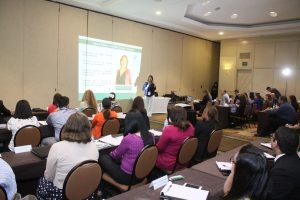
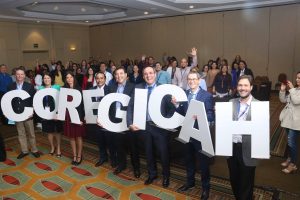
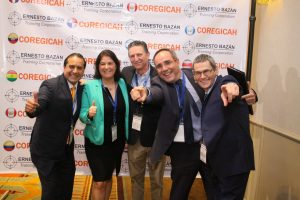
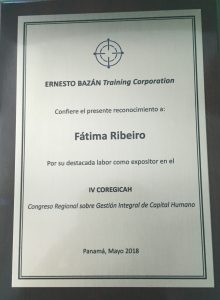
The audience follows a presentation by Fátima Ribeiro on leadershipGroup of COREGICAH participants poses with the name of the congressFátima Ribeiro with COREGICAH participantsFátima Ribeiro speaking into a microphone during COREGICAHCertificate of recognition awarded to Fátima Ribeiro at COREGICAH

Team members joining their hands as a symbol of collaboration

Coaching as a Tool for Social Development

According to the ICF Global Coaching Study 2016, carried out by ICF (International Coaching Federation) in collaboration with PWC, in 137 countries worldwide, the findings suggest that coaching can influence social change.

Worldwide, 51% of professional coaches surveyed and 49% of managers/directors, with coaching skills, consider that coaching is capable of greatly influencing social change. 33% of professional coaches and 27% of managers/directors, with coaching skills, consider that coaching is capable of moderately influencing social change.

The extent to which professional coaches consider coaching to be able to influence social change varies considerably from region to region.

In Latin America and the Caribbean, two out of every three coaches surveyed (68%) consider that coaching is capable of greatly influencing social change.

According to the ICF Global Consumer Awareness Study 2017, a study carried out by ICG and PWC in 30 countries, the main two benefits recognised in ICF studies on satisfaction with Coaching are improved communication skills (42%), followed by greater self-esteem / self-confidence (40%).

These are skills that create bridges in families, in organisations, in communities, that support a more balanced social and professional integration and that contribute to sustainable social and economic development.

Coaching as a development tool can be applied at different stages of life.
In young people, in professional adults, and in older adults, it contributes to creating greater awareness of one’s own value, to broaden perspectives for personal and professional development, to give a purpose to life and to build a legacy.

It is a tool that supports facing the challenges of each stage of life and conceiving opportunities in an increasingly volatile, uncertain, complex, ambiguous and hyper-connected world (VUCAH).
The improvement of communication skills, the improvement of self-esteem and self-confidence help to reduce isolation in current societies, contributing to a higher level of social integration.

At the organisational level, using coaching as a development tool also brings positive contributions and coaching can contribute to issues such as gender equality, diversity and inclusion.
In the 2017 ICF Global Consumer Awareness Study, the most commonly cited reason for seeking coaching was optimizing individual team work performance (43%), and the third most commonly cited benefit was increased productivity (39%).

Coaching as a tool for social development is thus transversal in society, applying to individuals, communities and nonprofit or profit organisations, collaborating on issues connected to corporate social responsibility and sustainable development objectives.

Fatima Ribeiro

A team gathered around a table to share ideas

The Future of Leadership

Recently attending a webinar by Dr. Marshall Goldsmith on the topic “leadership yesterday, today and tomorrow” and discussing leadership in educational media, motivated me to dedicate this article to the topic of leadership and its role in today’s society.
The current challenges of a global, complex, changing and diverse world demand different leadership.

The leader is no longer understood as a task-focused superior being who provides structure and direction but as a facilitator who is involved in dialogue and the participation of all.

“The leader of the past knew how to say, the leader of the future will know how to ask,” is a quote from Peter Drucker. For Paul Hersey “leadership is working with and through others to achieve objectives.”

Peter Hawkins tells us that the very concept of intelligence today is evolving. The concept of intelligence progressed from the intelligence quotient IQ to the emotional quotient EQ, and currently we are moving to the WeQ, that is, to the concept of collaborative intelligence.

The leader of the future demonstrates high interest, simultaneously in tasks or objectives and in people, and his behaviour changes according to what is required by the situation.

It is advisable to analyse the level of preparation of the teams, the autonomy in the decision and the level of power, prior to choosing the leadership style or the decision-making style.

Peter Hawkins believes that the people who will be most successful in the future will be those who have the greatest skills in establishing connections.

This reminds me of a quote from Jared Weiner at APEDE’s 2017 CADE Annual Executive Conference, “Soft skills like relationship building, collaboration, empathy, and cultural sensitivity will become the currency of the highest order. People with hybrid skills – high technological skill and deep social sensitivity – will win in the future.”

Global thinking, cultural and intercultural diversity, alliance building, intelligent technological knowledge and shared leadership (the leader as facilitator) are emerging dimensions of the global leader of the future, in the global leadership assessment model of MGSCC – Marshall Goldsmith Stakeholder Centered Coaching.

This MGSCC model is an interesting evaluation to serve as the basis for a coaching process for leadership development, in a structured, measurable and inclusive process of the stakeholders or people of interest around the leader, since leadership only truly exists when it is recognised. The model provides the structure and direction and the coach is a facilitator of learning.

Fatima Ribeiro

Fátima Ribeiro's visual identity on a card placed on grass

My Brand

Today I speak to you as an entrepreneur, who is developing her business and her brand.

Arriving at a brand is an introspection, a deep reflection on our values, our talents and what we want to convey.

I took the photo that accompanies this article in one of my favourite environments, nature.

I am a citizen of the world by choice, in a process of inner growth and family well-being.

But I find my roots, my tranquillity and my fulfilment in nature, in contemplating the perfection of nature.

I was born in Africa, in the wide, open spaces, where life grows in the most remote and unexpected places.

I grew up in Europe where human ingenuity amazes us, inspires us with the sensitivity of its works and values such as social development are imbued in culture.

I now live in Latin America, in Panama, where the exuberance of its nature fascinates us and its tropical climate creates prodigious conditions for development.

The green and blue in my logo represent schools and brands to which I owe my basic training in Coaching, INCAE Business School and Marshall Goldsmith Stakeholder Centered Coaching.

But they also represent the green of nature, in harmony with the expression of life, and the blue of the sky, of open spaces, of breadth, of new perspectives and possibilities.

As human beings we look to the sky and to space when we dream!

It is interesting to see how one of the most innovative men today sent his Tesla Roadster into space with the star man, Starman, in the driver’s position, on a trip that combines dreams and possibilities.

We look and long for the immensity of the possibilities of space, but we maintain our roots as living beings in nature.

My logo, my brand, thus reflects my values and invites continuous development.

Life grows and finds ways to survive even in unfavorable environments, but it flourishes when the environment is favourable.

The Coaching process helps to flourish, it is a process that nurtures growth, that enhances skills and talents, that invites us to dream, that opens new possibilities, maintaining contact with the earth, that takes root in a process of seeking results and well-being.

Fatima Ribeiro

Certified Coach