Posts

Feet balancing on a rope, representing uncertainty

Coaching in times of uncertainty

This article was originally published in the newspaper “La Estrella” and is part of a biweekly column from the ICF Panama Chapter to disseminate what Professional Coaching is. It seeks to inform, create more awareness and differentiate professional coaching, in which the Coach is governed by ethical principles and is continually improving his or her skills.

The International Coaching Federation (ICF), founded in 1995, is committed to advancing the coaching profession, which is why it has defined a model of key competencies with high ethical standards.

See the original article in this link.


Coaching in times of Uncertainty

To define the role and how Professional Coaching can support in times of uncertainty, instability and change, such as what COVID19 brings us, we need to keep in mind the definition of Coaching, according to the ICF – International Coaching Federation.

Coaching is a process of alliance with clients in which it is promoted through a reflective process. the stimulation of thought and creativity, seeking the maximization of personal and professional potential.

In the coaching process the focus is on the FUTURE, it is focused on developing SOLUTIONS for the future, with how questions. It supports the client in defining and focusing on their purpose, in building their vision, in evaluating current resources and those that need to be developed, in taking actions in accordance with their objectives.

We listen to what the Client is or is not saying, promoting support for the client’s self-expression; that evokes or awakens consciousness, facilitating the client’s understanding and learning through the use of tools and techniques such as powerful questions, silence, metaphor or analogy.

In the coaching process we recognise the emotions present at each moment without negative or positive connotations, we promote reflection on the areas or dimensions in which they are in the client’s control, jointly co-creating the state of mind that makes it possible to create solutions for the future.

Coaching is not Psychotherapy As mentioned in our article published in this column on March 1, 2020, in accordance with the ICF code of ethics, we refer clients to health professionals when we see warning indicators. We do not work in the space of panic, anxiety or depression, but we do work in the space of discomfort which is also a space of creativity and learning.

It is a process that can be carried out VIRTUALLY with effectiveness in results and well-being. Trust can be generated in the same way, and in some virtual processes the reflective process and communication can enhance the coachee’s learning.

Professional coaches work from SERVICE and CURIOSITY and are comfortable with Not KNOWING, which prepares them to support in situations of change and uncertainty. Discover more about the Coach Mentality in the article published in this column on March 15.

From the international and local ICF we work creating spaces for the development of the skills of our members, providing them with tools that allow them to be better Coaches in different contexts. We work locally with the support of an entire international structure to develop ourselves as professionals for the benefit of our clients.

The coaching process being a process of stimulating thought and creativity, from the vision of the desired future to the implementation of actions in the present that create solutions for that future, it can support, in this time of COVID19, among others:

  • People who need to develop new solutions for this changing, uncertain and ambiguous reality. We suggest reading in addition the article published in this column on February 20 “When to go to a certified personal coach?
  • Leaders who require support in dealing with ambiguity, making difficult decisions, communicating in this time of crisis, creating alliances with all stakeholders and cultivating a strategic leadership vision of today, tomorrow and the future.
  • Teams that require developing connections and relationships and evolving into high-performance teams.

The coaching process is not mentoring, it does not indicate what actions or decisions the client should take, it facilitates growth, to transform learning, knowledge and vision into action, promoting the client’s autonomy.


The author is ACC (ICF Associated Certified Coach), Coach in professional development, leadership and teams processes and member of the Board of Directors of ICF Panama.

Professionals sharing ideas during a work meeting

Key competencies in professional and ethical coaching

This article was originally published in the newspaper “La Estrella” and is part of a biweekly column from the ICF Panama Chapter to disseminate what Professional Coaching is. It seeks to inform, create more awareness and differentiate professional coaching, in which the Coach is governed by ethical principles and is continually improving his or her skills.

The International Coaching Federation (ICF), founded in 1995, is committed to advancing the coaching profession, which is why it has defined a model of key competencies with high ethical standards.

See the full article here link.

A trainer talking with a group of professionals

What is Coaching?

This article was originally published in the newspaper “La Estrella” and is part of a biweekly column that we will have from the ICF Panama Chapter to spread what professional Coaching is. It seeks to inform, create more awareness and differentiate professional coaching, in which the Coach is governed by ethical principles and is continually improving his or her skills.

Coaching is defined by the ICF International Coach Federation as a process of alliance with clients in which the stimulation of thinking and creativity is promoted, seeking to maximise personal and professional potential, “professional coaching is based on an association with clients in a process of reflective and creative support that inspires them to maximise their personal and professional potential”…

See the full article here link


Fátima Ribeiro with another participant at ICF Panama's Coaching Fair

Coaching Fair – ICF Panama Chapter

On July 3, the Coaching Fair was held with the theme “Recognising and Practicing Professional and Ethical Coaching, an excellent event with the quality of ICF Chapter Panama, with international speakers such as Damian Goldvarg and Luchy Mejía and the participation of chapter members facilitating interactive workshops.

Some of the important messages:

  • “Of increasing importance in modern, complex and highly uncertain environments, coaching is defined by the International Coach Federation (ICF) as a process of alliance with clients in which the stimulation of thinking and creativity is promoted, seeking the maximization of personal and professional potential.
  • Practiced by qualified professionals, coaching is a continuous process of active communication in which the coach recognizes and respects the client’s autonomy in relation to their personal and work life.
  • The coach understands that each client is a holistic, creative and resourceful individual.
  • Coaching is a differentiated service from therapy, mentoring, consulting and training processes.
  • The ICF is dedicated to advancing the coaching profession by establishing high ethical standards (11 competencies and a code of ethics), providing independent certification, and building a global network of accredited coaches in a variety of coaching disciplines.”

Thanks to all the participants in the Fair, to all the ICF members who conceived, worked together for several months and made it possible to carry out this great event, thanks to the sponsors who participated, to the media that supported us in spreading the word about what Professional and Ethical Coaching is, and also to the participants who co-created with me and Erica Tamagusuku the workshop “And Now… How? Co-Creation for a Challenging World”!

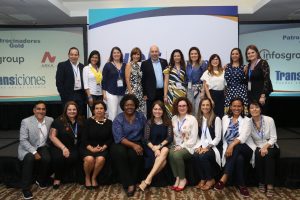
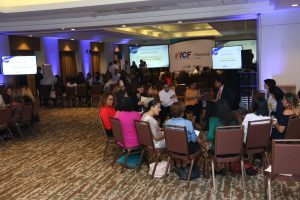
Group photograph of the participants of the ICF Panama Coaching FairParticipants gathered in the room of the ICF Panama Coaching Fair

Fátima Ribeiro presenting tools for personal and professional development

Tools for personal and professional development

On Friday, May 3, within the framework of the ICW – International Coaching Week ease one webinars free, in a joint organisation of ICF chapters in Latin America.

He coaching is defined by the International Coach Federation (ICF) as “a process of alliance with clients in which the stimulation of thinking and creativity are promoted, seeking the maximization of personal and professional potential.”

In the video you can find tools and valuable concepts such as values, skills, objectives and how to develop an action plan with results and well-being, the creation of a support network, feedback and feedforward.

Professional coaching that promotes the opening of new perspectives seeking to maximise personal and professional potential.

Watch the video here 


Poster for Fátima Ribeiro's webinar on tools for personal and professional development

Tools for personal and professional development

On Friday, May 3, from 3:00 to 4:30 pm (Panama time) within the framework of the ICW – International Coaching Week I will be providing a webinars free, in a joint organisation of ICF chapters in Latin America.

He webinar has the theme “Tools for personal and professional developmentl”. More information here.

He coaching is defined by the International Coach Federation (ICF) as “a process of alliance with clients in which the stimulation of thinking and creativity are promoted, seeking the maximization of personal and professional potential.”

From April 29 to May 5, different activities are promoted so that you can learn more about professional coaching and its benefits. On the Facebook page of ICF-IWC LATAM you can find all the information.

The ICF – Panama Chapter has existed since November 2015, promoting professional and ethical coaching and continuing education of its members.

Team members joining their hands as a symbol of collaboration

Coaching as a Tool for Social Development

According to the ICF Global Coaching Study 2016, carried out by ICF (International Coaching Federation) in collaboration with PWC, in 137 countries worldwide, the findings suggest that coaching can influence social change.

Worldwide, 51% of professional coaches surveyed and 49% of managers/directors, with coaching skills, consider that coaching is capable of greatly influencing social change. 33% of professional coaches and 27% of managers/directors, with coaching skills, consider that coaching is capable of moderately influencing social change.

The extent to which professional coaches consider coaching to be able to influence social change varies considerably from region to region.

In Latin America and the Caribbean, two out of every three coaches surveyed (68%) consider that coaching is capable of greatly influencing social change.

According to the ICF Global Consumer Awareness Study 2017, a study carried out by ICG and PWC in 30 countries, the main two benefits recognised in ICF studies on satisfaction with Coaching are improved communication skills (42%), followed by greater self-esteem / self-confidence (40%).

These are skills that create bridges in families, in organisations, in communities, that support a more balanced social and professional integration and that contribute to sustainable social and economic development.

Coaching as a development tool can be applied at different stages of life.
In young people, in professional adults, and in older adults, it contributes to creating greater awareness of one’s own value, to broaden perspectives for personal and professional development, to give a purpose to life and to build a legacy.

It is a tool that supports facing the challenges of each stage of life and conceiving opportunities in an increasingly volatile, uncertain, complex, ambiguous and hyper-connected world (VUCAH).
The improvement of communication skills, the improvement of self-esteem and self-confidence help to reduce isolation in current societies, contributing to a higher level of social integration.

At the organisational level, using coaching as a development tool also brings positive contributions and coaching can contribute to issues such as gender equality, diversity and inclusion.
In the 2017 ICF Global Consumer Awareness Study, the most commonly cited reason for seeking coaching was optimizing individual team work performance (43%), and the third most commonly cited benefit was increased productivity (39%).

Coaching as a tool for social development is thus transversal in society, applying to individuals, communities and nonprofit or profit organisations, collaborating on issues connected to corporate social responsibility and sustainable development objectives.

Fatima Ribeiro